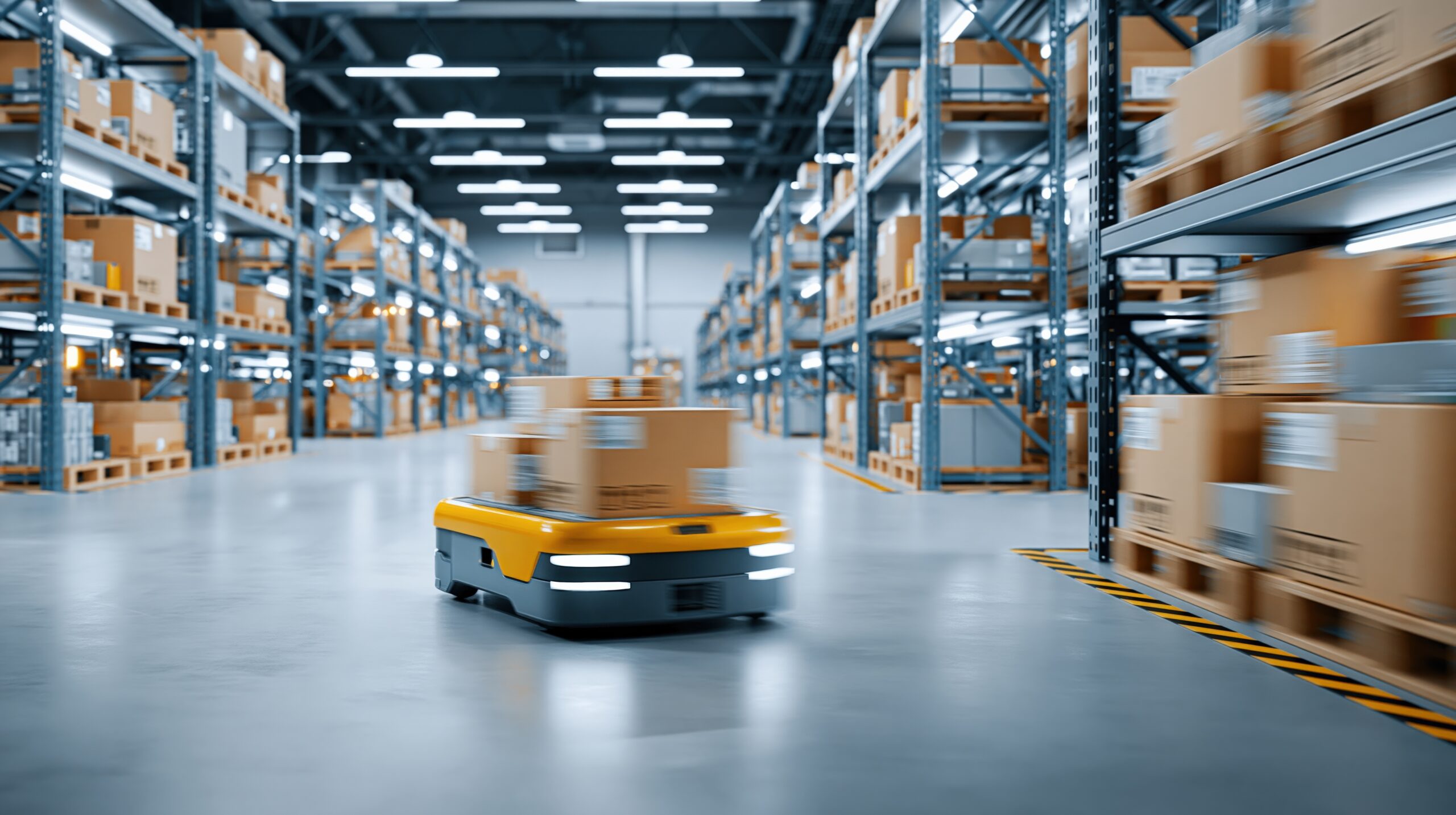
Labour shortages are forcing warehousing organisations to act. Across the logistics sector, organisations are facing increasing difficulty attracting and retaining operational staff, while labour costs continue to rise. As a result, automation and mechanization have moved rapidly up the strategic agenda.
At the same time, the technology has matured. Automated packaging lines, sorting systems and goods-to-person solutions have become more accessible, implementation times have shortened and business cases have improved. Solutions that were once only viable for large distribution centres only, are now increasingly within reach for mid-sized operations.
Yet this growing availability also creates a risk. Organisations may focus on selecting the right technology before fully understanding the performance of their current operation.
The temptation of the big leap
As the case for mechanisation becomes stronger, many organisations are eager to move quickly. Technology vendors are engaged, business cases are developed and investment decisions follow. While this sense of urgency is understandable, it can also lead organisations to overlook a crucial step: gaining a clear understanding of how the current operation performs and where optimisation opportunities still exist.
Mechanisation can only be fairly assessed with a solid starting point. Every investment decision is evaluated against an alternative, and in this case that alternative is the existing operation. Yet many organisations have only limited visibility into their true baseline. Productivity losses caused by inefficient travel routes, missed picks, suboptimal batching, non-value-adding activities or underutilised equipment often remain hidden. Without this insight, it becomes difficult to determine where automation will genuinely create value and where operational improvements alone could deliver similar results.
Comparing an automated system with a poorly organised manual operation gives a distorted picture. It leads to investment decisions that in practice deliver less than expected, or to suboptimal system choices because the baseline conditions were not properly established.
The hidden value of optimisation
Before mechanisation comes into play, organisations can often realise significant improvements by optimising existing processes. And those improvements can be realised faster than most people think. Areas that frequently offer immediate opportunities include:
- Smarter order management and batching, achieved by intelligently grouping orders and optimizing batching, can substantially increase pick productivity without requiring a single robot.
- Optimised slotting and travel routes, reducing travel distances, errors and processing time.
- Better utilisation of existing equipment: companies often have already invested in conveyors, scanners, pick-to-light systems, or other aids that are far from optimally used. Optimising these often delivers quick results.
- Sharpening internal replenishment business rules, ensuring pick locations are replenished before they run empty and that replenishment and picking are properly aligned – for example by starting replenishment an hour earlier – can prevent missed picks and significantly improve throughput.
- Data-driven bottleneck analysis, identifying where operational time and capacity are actually being lost – including through unhappy flows and exceptions.
Combined, these improvements can increase operational performance by 10–30% without major capital investment, while also providing a far more reliable baseline for future mechanisation decisions.
Better data, better decisions
What used to make this type of analysis labour-intensive has changed radically today. AI-powered analytics now make it possible to process large volumes of WMS data, order profiles, travel patterns and utilisation rates in a fraction of the time previously required.
Rather than spending weeks analysing operational performance, organisations can rapidly identify bottlenecks, quantify improvement potential and build robust business cases. These insights create the foundation for deciding whether optimisation alone is sufficient, where mechanisation will deliver the greatest value, or how both approaches should be combined.
Master data quality is another area that is often underestimated. Accurate product dimensions, weight data and packaging restrictions – for example, whether an item is fragile or compatible with automated packaging – are essential for both operational performance and reliable mechanisation decisions. Incomplete or incorrect master data frequently causes exceptions and inefficiencies in current operations, and becomes even more critical once automation is introduced.
Building a better business case
Mechanisation is often the right strategic direction. Labour shortages are unlikely to disappear, technology continues to improve and many organisations will ultimately benefit from greater levels of automation.
However, the strongest business cases begin with a clear understanding of the current operation. By optimising first, organisations establish an accurate baseline, make better investment decisions and ensure that new technology addresses the right challenges rather than compensating for avoidable inefficiencies.
Would you like to know what can still be optimised in your current operation before taking the step towards mechanisation? Or has the decision to mechanise already been made, but is the question now which solution is the right one? At Argon & Co, we help organisations assess their warehouse operations from end to end, identifying where operational improvements can be realised today and where mechanisation will create lasting value. By combining operational optimisation, data-driven analysis and automation strategy, we help clients invest with confidence and maximise the return on their logistics transformation.
Share: