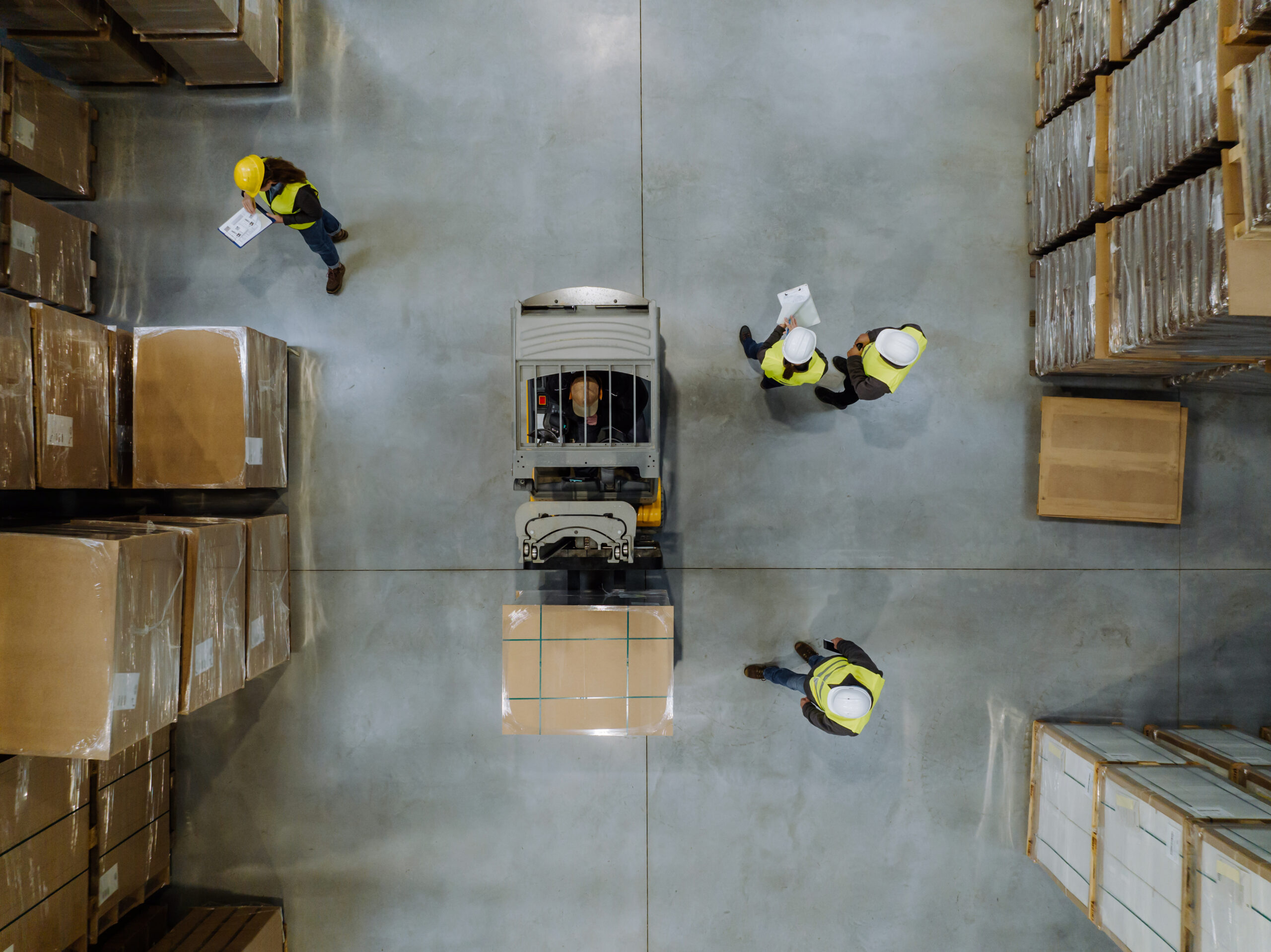
Retail peak is often treated as a short, intense period that businesses must simply survive. But the pressure felt during Black Friday, Cyber Monday, Boxing Day and the holiday season is rarely created by peak itself. It is the result of decisions made months earlier, from how demand is forecast and inventory is positioned to how labour, technology and partners are prepared.
The organisations that perform best during peak do not rely on heroic effort or last-minute fixes. They build an operating model that can absorb variability, respond to disruption and maintain service when conditions are less predictable than planned.
Peak is a test of the whole operating model
A retail distribution centre may appear to have sufficient capacity based on average volumes. The challenge emerges when the nature of demand changes.
A surge in direct-to-consumer orders places very different demands on an operation than a store replenishment cycle. Product cube, order lines, handling requirements, promotional activity and delivery commitments all influence the capacity required.
This means peak planning cannot focus only on units or orders. Retailers need to understand the shape of demand and how it will flow through the entire network.
A forecast will always contain uncertainty. Weather, customer sentiment, promotions, product availability and market conditions can all change the outcome. The objective is therefore not to predict peak perfectly. It is to understand the operational consequences of different scenarios and prepare the organisation to respond.
The constraint is rarely where it first appears
When an operation begins to fall behind, the instinct is often to add labour. Sometimes that is the right response. Often it is not.
The underlying constraint may be inaccurate inventory, poor replenishment, congestion, equipment availability, system performance or a bottleneck at the packing or dispatch stage. Adding people to an already congested process can increase cost without improving throughput.
Peak performance requires leaders to look beyond the most visible problem and identify the true constraint. This calls for timely operational data, clear performance measures and a disciplined approach to root-cause analysis.
The question should not simply be, “How many more people do we need?” It should be, “What is preventing the operation from converting effort into flow?”
Automation creates capacity, but not resilience on its own
Automation is an important part of modern intralogistics. It can increase throughput, improve consistency and provide additional capacity when volumes surge.
However, automation does not remove the need for strong operating discipline. It creates a connected system with upstream and downstream dependencies. Inventory must be accurate and correctly positioned. Products must be suitable for the technology. Inbound processes must keep the system supplied, while packing, dispatch and transport must be capable of handling the output.
When these dependencies are overlooked, automation can move the bottleneck rather than eliminate it.
Resilient operations also maintain practical alternatives. Manual workarounds, backup processes and clear procedures for system or equipment failure can provide critical flexibility when automated capacity is unavailable.
The most effective organisations test these scenarios before peak. They do not wait for a failure to discover whether the contingency plan is workable.
Labour flexibility depends on preparation
Peak labour planning is not just a question of recruiting enough people. It is about ensuring that people can become productive quickly and work safely within the operating model.
Temporary workers need clear roles, effective induction, appropriate training and support on the floor. Experienced employees should remain focused on critical activities, while less complex and repeatable tasks can be designed for rapid onboarding.
The employee experience also matters. A supportive environment, visible leadership, practical communication and a sense of team can have more impact than increasingly complex incentive schemes.
Labour flexibility is built before peak through relationships with recruitment partners, training routines and a clear understanding of which roles are genuinely critical to service.
Partnerships are part of the capacity plan
No retailer operates peak in isolation. Carriers, 3PLs, technology providers, maintenance teams and suppliers all contribute to the customer promise.
These relationships should be managed as part of the operating model, not treated as emergency support. Partners need early visibility of expected volumes, timing, product profiles and potential changes to the plan.
Transparency is particularly important when capacity is constrained. A partner that understands the issue early can help identify trade-offs, adjust resources or develop alternatives. A partner that is informed only after service has failed has far fewer options.
Reliability during peak is built through trust, regular communication and a shared understanding of what success looks like.
Make the important decisions before the pressure arrives
When peak is close, organisations should resist the temptation to pursue every possible improvement. The priority is clarity.
Leaders need to agree which products, customers, stores and service commitments must be protected. They need to define roles, escalation paths, performance measures and decision rights. They need to know when peak begins, when it ends and which support functions must be available throughout.
A focused daily management process can then keep the organisation aligned as conditions change. It should highlight what has happened, where the current constraint sits, what decisions are required and who owns the next action.
Peak performance is built all year
Retail peak is not a standalone event. It is the outcome of the operating habits established during business-as-usual.
Well-designed processes, accurate inventory, reliable systems, trained teams, trusted partners and disciplined daily management create the foundation for resilience. When those foundations are strong, peak becomes an opportunity to scale performance, rather than a crisis to contain.
The goal is not to eliminate uncertainty. It is to build an operation capable of absorbing it.
Discover how Argon & Co helps retailers build more flexible, connected and resilient operations, ready to perform under pressure.
Share:



Jeffrey Triantafilo
Partner, Australia