Walking the floor at CeMAT 2026 and sitting through our AI in Logistics workshop, the shift in how logistics professionals are thinking about technology was obvious. The curiosity phase is largely behind us. Operators, integrators and technology providers were far less interested in what automation or AI can do in principle than in how to deploy it against real operational constraints, with the systems and data they already have.
CeMAT is not a conference where people talk about supply chains from 30,000 feet. It draws the people who work inside warehouses and distribution centres for a living, and the exhibitors, sessions and conversations on the floor all follow from that. The questions people bring to CeMAT tend to be operational and specific rather than strategic and broad, which made it a useful place to take the stock of where the intralogistics landscape is.
The problem inside the four walls is getting harder
The growing complexity inside the warehouse was the clear underlying theme of the even. A decade ago, many operators were evaluating one automation solution at a time, perhaps a conveyor system, a sorter or a new WMS implementation, which is no longer the typical picture.
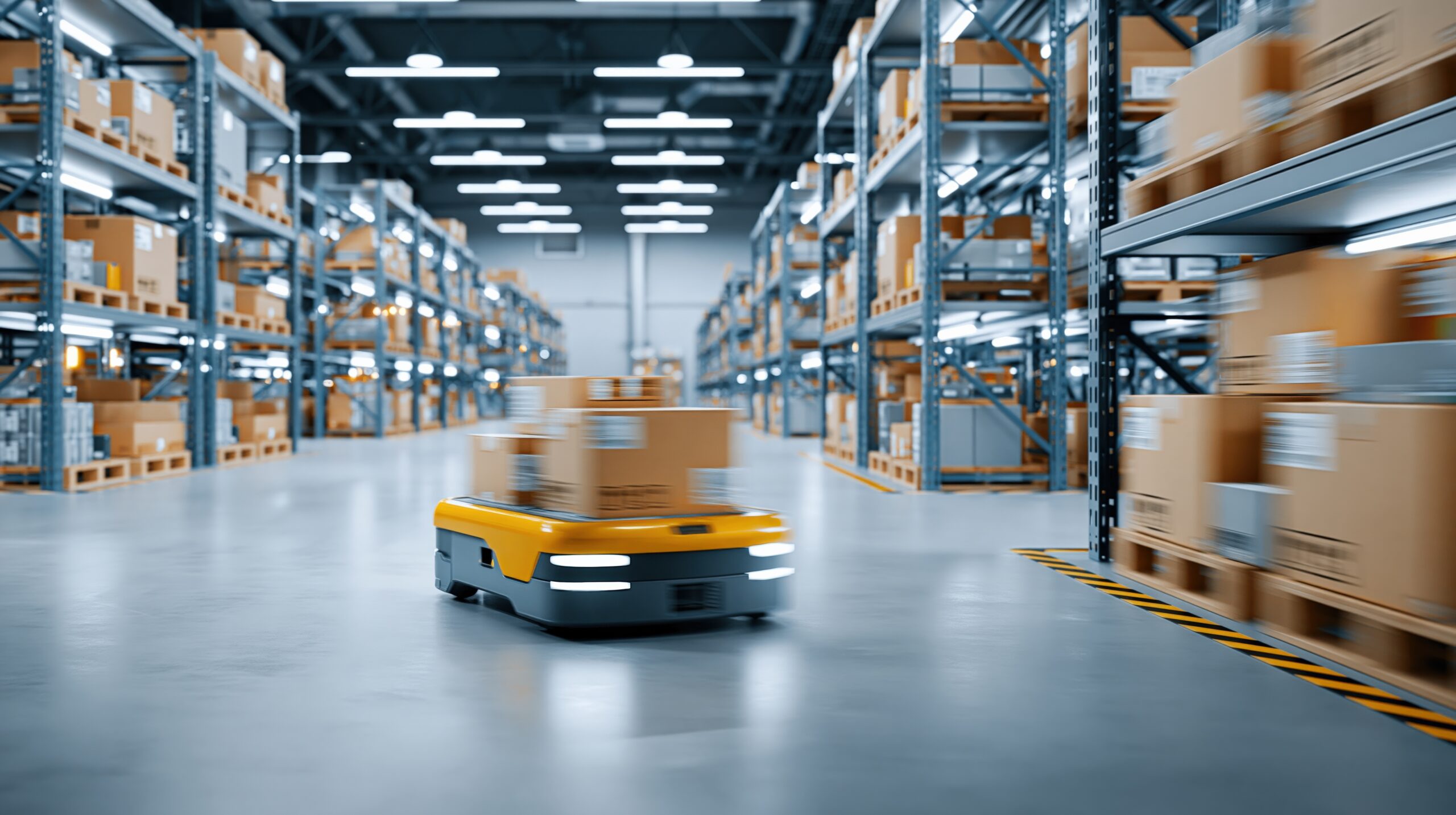
Operators are now managing, or planning to manage, AMRs, AGVs, ASRS, conveyor and sortation systems, RFID and dimensional scanning, robotic piece picking, cobot AMRs, and multiple layers of execution software across WMS, WCS and WES platforms. Each of these technologies has a vendor, an integration requirement, a data feed and its own operational rules. Together, they create a warehouse environment that is more capable but also much harder to run.
The frustration we heard most consistently was with point solutions that perform well in isolation but create new problems at the interface with other systems. The integrators generating the most interest were those who could speak credibly to the full operating environment, not just their own product. Behind that frustration sits a growing demand for something that can connect systems, coordinate activity across equipment and workflows, and keep the business free to choose the right technology for each problem without being locked into a single vendor. The warehouse of the near future will be defined less by how much automation it has, and more by how well everything it has automated works together.
AI is most useful when it improves the quality of decisions
The AI applications that resonated most with the audience are rarely the most technically impressive. They are typically the ones that solve a problem people in the room recognise immediately.
Midway through the WMS Decision Intelligence Copilot demonstration, people in the workshop were already asking how they could get it into their own operations. The way you interact with it was almost beside the point. People leaned in when they saw what it was actually doing, reading live WMS data to show supervisors where output is dropping, what drives productivity gaps, and where to focus to ensure throughput attainment. Everyone in the room recognised the problem it was solving. Rather than a generic AI product, it addresses something warehouse supervisors deal with every shift: not enough visibility into what is going wrong and why, delivered before they need to act.
Logistics leaders at CeMAT were asking how to improve labour allocation, identify inventory exceptions earlier, recover throughput when bottlenecks form, and give supervisors better information at the moment they need to act. Those are operational questions, not AI questions, and that distinction matters for how the technology gets deployed and what it actually delivers.
The near-term opportunity sits with copilots and agents rather than fully autonomous decision engines. Many organisations can begin with the data they already have, building useful capability around exception summaries, reporting automation, warehouse supervisor support and inventory risk visibility. Fully autonomous systems require stronger foundations, including cleaner master data, real-time integration and proven governance. But the case for starting with existing operational data to generate better decisions faster is more achievable than most organisations currently believe.
AI does not remove the need for logistics leadership or operational judgement. Rather, it changes where that judgement is applied. The supervisors and planners of the near future will spend less time manually extracting data or diagnosing problems from scratch, and more time interpreting recommendations, managing exceptions and leading operational performance. The most credible and sustainable model still has human leadership at its core.
The financial model for automation is also changing
More prominent at this year’s CeMAT than at previous events was the shift in how automation is being funded and packaged commercially. Robots-as-a-Service, pay-per-pick arrangements, subscription-style robotics and usage-based pricing structures were visible across a meaningful number of exhibitors and conversations.
For much of the past decade, large-scale warehouse automation has required a significant capital commitment, with long payback horizons and substantial implementation risk. That structure has made it difficult for small and medium-sized operators to justify automation, even when the operational case was sound. A new set of commercial models is emerging that allows businesses to trial, scale or commit to automation without carrying the full upfront investment from day one. The automation model is moving from buying the asset to paying for the outcome.
Combined with increasingly modular robotics and systems integrators who can absorb complexity on behalf of the operator, automation is becoming accessible to a much broader range of businesses. Fewer operators are asking whether they can afford it. The question now is what the right scope, commercial structure and integration approach look like for where they are today.
What comes next
Two things stood out from CeMAT 2026 as likely to shape the next phase of logistics operations. The warehouse technology environment is becoming more complex, creating real demand for systems and partners that can bring everything together across equipment, software and workflows. At the same time, the commercial model for automation is changing, lowering the upfront cost and implementation risk for businesses that previously could not justify the commitment.
For the operators and businesses we work with, both shifts are already underway. The organisations moving forward now, connecting their technology choices to clear operational problems and measurable outcomes, are not waiting for the technology to mature as in most cases it is already there.
Working with Argon & Co
At Argon & Co, we help logistics and supply chain businesses work through exactly these questions, from identifying the right operational problems and assessing where automation and AI genuinely create value, through to commercial structuring, technology selection, implementation support and performance measurement. If our findings from CeMAT are relevant to the challenges you are currently working through, we would welcome the conversation.
Share:


Primo Danieletto
Associate Partner