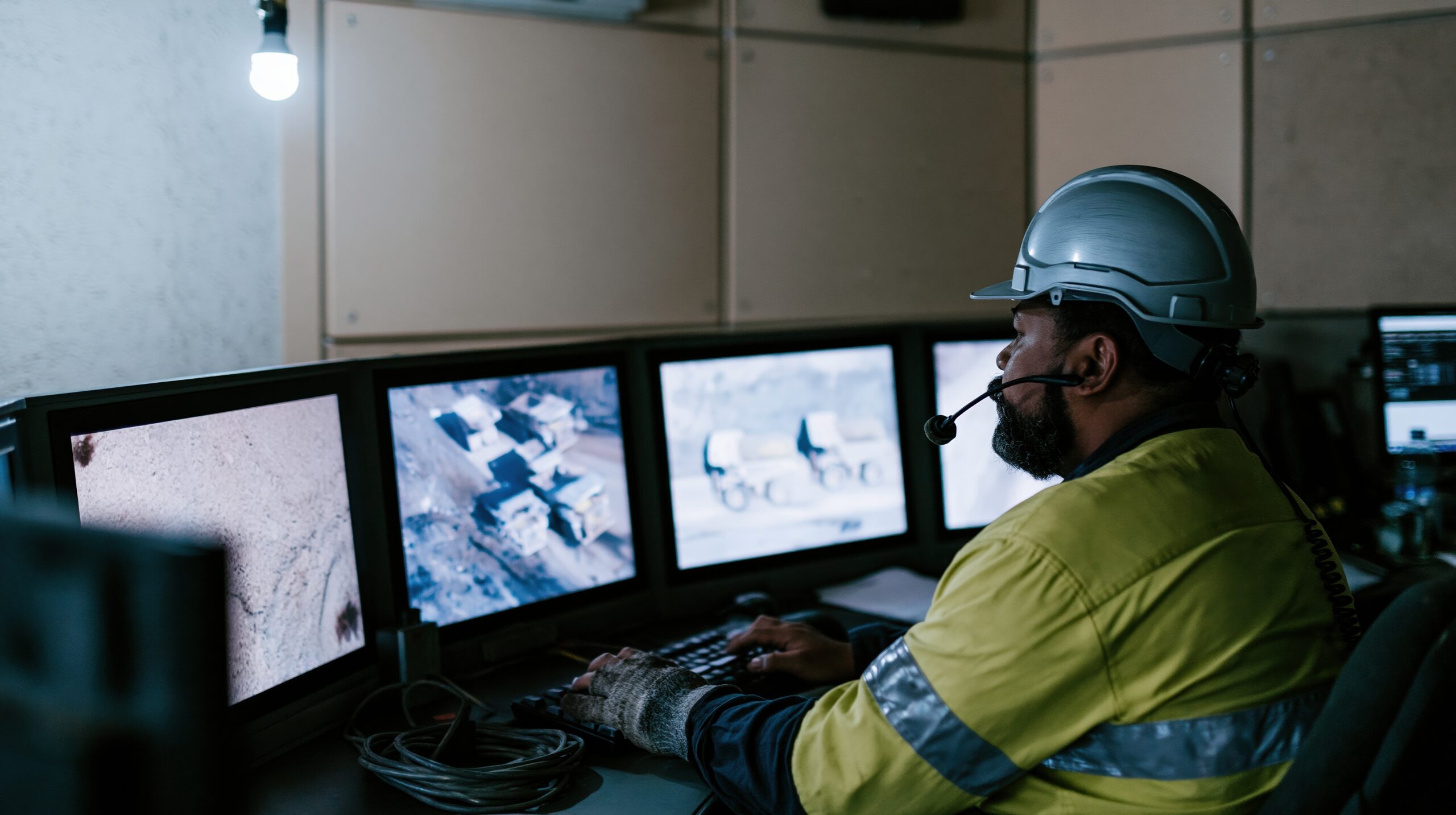
Autonomy and AI are moving heavy industry’s frontline from the cab to the control room. The jobs aren’t disappearing, but they are changing faster than the training system can keep up. The firms that use AI to build skills, not just replace tasks, will win the next decade.
Across heavy industry, AI is everywhere, but performance from AI is not. Turning AI into RO(A)I means moving from everyday experimentation to measurable value, and nowhere is that clearer than in how we build the skills of the people running the operation.
Last year I finished a Masters in Data Science and Innovation at UTS while working full time. Frankly, it was like learning Greek and Russian at the same time. What got me through wasn’t the lectures. It was a data science tutor I built myself from the AI tools that were emerging, within the highly fluid academic guardrails. Having somewhere to take increasingly complex questions at six in the morning was a godsend.
I think about that tutor a lot in conversations with heavy-industry clients. Their people don’t need a Masters. But they face the same problem I did: complex new skills, learnt on the job, with no time to stop and study.
The cab is becoming a console
Rio Tinto runs more than 90% of its Pilbara haul fleet autonomously, coordinated from an operations centre in Perth more than 1,500 kilometres away. Roy Hill finished converting its 78-truck fleet to driverless operation in late 2025, and around half of BHP’s trucks are now autonomous.12 Globally, the autonomous haulage fleet nearly tripled between 2024 and 2026.
What happens to the people is more interesting than what happens to the trucks. Drivers are becoming remote operations specialists and autonomous fleet controllers. Researchers call it “grey-collar” work: operational know-how combined with digital capability. It is less physical and more cognitive, built around “monitoring, control and data interpretation”.
The evidence says people can make that move. At BHP’s Jimblebar operation, more than half of the mine control team were former heavy vehicle operators.
Relocated, not removed, but not painless
The headline fear is that AI and autonomy will wipe out frontline jobs. So far, the data doesn’t support it. The World Economic Forum expects frontline roles, including construction workers, to deliver the largest absolute job growth to 2030, and Jobs and Skills Australia lists construction and mining labourers among the occupations likely to gain the most employment by 2050.
But “relocated” hides real costs. Some roles will shrink: the mining skills alliance AUSMASA projects the number of truck drivers, welders and flame cutters will fall by more than 10% by 2028. The new roles skew to the capital cities. One study found fewer than 10% of workers at BHP’s Brisbane remote operations centre had come from the coal basin sites. And some people, offered a console, choose to leave rather than retrain.
Meanwhile, the industry is short of exactly the people it needs. Nearly half of Australia’s trade occupations are in shortage. More than half the process-industry workforce is 45 or older, and mining engineering enrolments have fallen by more than 60% in a decade. When experienced operators and maintainers retire, decades of judgement walk out the gate with them.
So this isn’t a jobs-apocalypse problem. It’s a skills-and-pace problem.
Where AI changes the economics of skills
Most of the AI conversation in heavy industry is about maintenance, throughput and planning, and rightly so; that is where most of the value sits.8 But the same technology can be pointed at people.
Some of the best evidence comes from outside mining. In a study of more than 5,000 customer support agents, a generative AI assistant lifted productivity by 14% on average, and by 34% for the newest and least experienced workers, partly by spreading the practices of the best performers. That is the experience curve, compressed.
Early versions are already on site. MaxMine’s MAXI assistant lets supervisors and dispatchers ask questions about the current shift in plain language and record shift notes by voice. Its clients include Glencore, Mineral Resources and Macmahon. No results have been published yet, so it is early days. But it shows the shape of what’s coming: the knowledge of the best operator in the pit, available to the newest one.
Training models are moving too. BHP’s FutureFit Academy offers a 12-month maintenance traineeship and a two-year trade apprenticeship for people new to the industry, and more than 80% of its students have been women. Pair a programme like that with an AI tutor that knows the site’s equipment and procedures, and time to competence could fall further still.
The constraints are real
It would be easy to blame companies or unions for moving slowly. But much of the system was built for a world where the operator sat in the cab.
Safety comes first, as it should. Western Australia has had a code of practice for safe mobile autonomous mining since 2015, built around hazard management and competent people. Every new way of operating has to be proven safe before it scales.
Change is negotiated, not announced. Every enterprise agreement must include a term requiring consultation on major workplace change. Redesigning roles takes time and trust.
The training system lags the work. Qualifications are slow to catch up with roles that didn’t exist five years ago, and site-specific knowledge rarely makes it into a formal course.
Geography matters. Moving work from regional sites to city control rooms changes the towns that have carried this industry for generations.
None of these rules are unreasonable on their own, and most exist for good reasons. Together, they make change slow. However, there are green policy shoots. The National AI Plan expects employers to support workers’ AI training and to consult meaningfully when they introduce AI. That is a mandate to do this properly.
What I’d like to see
None of this needs a perfect strategy. A few practical places to start:
- Map the roles before the trucks arrive. Identify which roles will change, shrink or appear, and build clear pathways and micro-credentials early1
- Consider investing early in 360 degree digitisation; The physical interactions of today will be the training data of tomorrow
- Build the site AI tutor. Put manuals, procedures and the know-how of your best operators into an assistant every new starter can ask
- Capture tacit knowledge before it retires. Bring your most experienced maintainers into the AI programme, not just the graduates
- Explore the Second Brain investment: retiring team members have an opportunity to leave an AI/ digital legacy making entering the heavy industry workforce more compelling
- Measure time to competence, not just trucks converted
- Keep some of the future close to the regions, with training, pathways and control roles near the communities that have carried the industry
Lead the change
I’m a fan of this industry and the people in it. The shift from cab to console is already happening, and on the evidence so far it can be a good one: safer, more skilled, and open to people who would never have pictured themselves in mining. My frustration is with the pace at which we are building the skills to match.
The question isn’t whether AI takes the job. It’s whether we use it to build the next generation of operators before the last one retires. Heavy industry can lead this change, or have it done to it. If you are mapping where AI can lift your workforce’s performance, Argon & Co can help you turn that ambition into a measurable plan, get in touch to discuss your site.
Share:



Aiden Heke