
The death of the static network
For years, network design meant a big project every few years — data collection, modeling, and a polished presentation showing where to add or close a manufacturing site or a DC. Then, the model goes into hibernation until the next major review or restructuring cycle.
That rhythm simply does not work anymore.
Demand pattern shifts monthly, freight costs change weekly, and trade lanes reconfigure overnight. By the time power point deck is approved, half the assumptions inside it are already outdated.
Static design once made sense when the world moved slower.
Today, it is the bottleneck.
From big project to living system
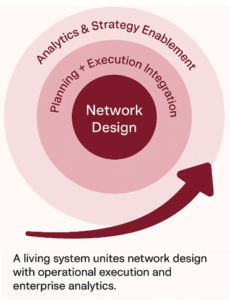 The leading organizations are rethinking how they treat network design.
Instead of a one-time strategic exercise, they are building living systems — models that never truly “end,” continuously fed by live data from ERP, WMS, or TMS platforms.
Instead of asking “What’s the optimal footprint?” leading companies now ask, “Is my footprint still optimal today?”
In the old world, network design was a two-year event — static models, manual data pulls, and decisions made after the fact.
In the new world, it’s continuous — automated data feeds, live dashboards, and models that learn as they go. The goal isn’t to re-optimize every week — it’s to stay calibrated.
What living design really means
So, what does living design look like in practice?
It connects design models with the operational heartbeat of the business.
Real-time cost, demand, and service data keep the model alive — allowing teams to see when the network starts drifting from plan and what to do about it.
These models don’t sit idle. They are continuously updated, simulate multiple futures, and sense changes before they become problems.
In practice, living design systems:
- Track cost-to-serve in near real time
- Run “what-if” simulations in hours, not weeks
- Trigger alerts when cost or capacity drifts
- Predict sourcing or capacity shifts before they happen
“Living design is a network model that thinks with the business – not after it.”
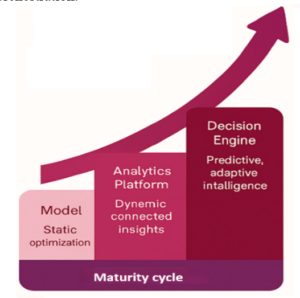 Design as a continuous capability
As network design becomes embedded in daily decision-making, its role shifts — from analysis to orchestration.
“In the best-run supply chains, design never ends — it evolves.”
Share: